263.90 €
330.00 €
Discount 20% off
Price history
Lowest price in the last 30 days before the discount was applied: 330.00 €

- Free shipping!
- Estimated delivery on Tuesday 27. 10.
Nidecker Play Men's Snowboard
With the Nidecker Play, you don't have to worry about your first turns because its twin directional shape is ideal for easy control and the soft flex offers a smooth, fatigue-free ride for complete beginners or casual riders looking to improve quickly.
Lightness, pop, great response and durability are provided by a classic wood core, dual-axis laminate and a topsheet that dampens vibration. The Flatrock is the perfect choice for getting started on the board, and once you gain enough confidence to ride in the park, you'll appreciate the symmetrical shape for switch riding and landings.
Specifications & shape
- Flex: 1/5 - Forgiving and fun. The soft flex helps lighter riders control the board more easily and builds confidence when making their first turns.
- Destination: resort 3/5, powder 3/5, park 2/5
- Directional Twin shape - the perfect blend of two worlds. The tail is long enough for comfortable switch riding, but the nose is a little longer for better float and stability. A great choice for freestyle riders who want to plow the entire mountain.
- Profile Flatrock – the board is flat between the bindings and rises towards the tip and tail into a rocker. This makes it feel more stable and calm than camber.
- 1% For The Planet – Nidecker sends 1% of sales directly to non-profit organizations fighting climate change.
Technology
- Classic Sandwich construction – a construction that you can find in other brands' top models, is standard for Nidecker. The wooden core forms a sandwich with the base and upper materials and is protected by sidewalls.
- Absorbnid Topsheets – an innovative topsheet was developed to absorb unwanted vibrations and allow for a smooth ride.
- Inserts 4 × 4/4 – These basic inserts are the first step to finding your optimal stance when you're just starting out in snowboarding. With four rows of inserts, separated by a 4cm gap, the board gives you a wide range of stance options.
- Biax Standard Lamination – a decades-proven fiberglass that is woven in two directions at a 90° angle to provide flexibility and good contact with torsional flexibility. This is a versatile and lightweight construction.
- Full Wood Core - Time-tested poplar core. Ideal for riders looking for a lively ride with lots of pop.
- N-5000 Extruded base – an extremely durable universal base that stays fast even without regular waxing.

| 149 | 152 | 156 | 156W | 159 | 159W | 162W | |
|---|---|---|---|---|---|---|---|
| Rider's Weight (kg) | 50-60 | 60-70 | 65-75 | 70-85 | 65-75 | 70-85 | 75- |
| Effective edge (cm) | 89 | 92 | 96 | 96 | 99 | 99 | 102 |
| Nose width (cm) | 28.5 | 29.1 | 29.2 | 29.8 | 29.5 | 30.3 | 30.6 |
| Waist width (cm) | 24.4 | 25.2 | 25.4 | 26 | 25.5 | 26.3 | 26.6 |
| Tail width (cm) | 28.5 | 29.1 | 29.2 | 29.8 | 29.5 | 30.3 | 30.6 |
| Sidecut (m) | 7 | 7.4 | 7.6 | 7.9 | 7.7 | 8 | 8.2 |
| Stance Range (cm) | 43-59 | 44-60 | 47-63 | 47-63 | 48-64 | 48-64 | 48-64 |
| Set back (mm) | 10 | 10 | 10 | 10 | 10 | 10 | 10 |
| Center stance (cm) | 51 | 52 | 55 | 55 | 56 | 56 | 56 |
| Stiffness | 3 | 3 | 3 | 3 | 3 | 3 | 3 |
| Inserts | 4×2 | 4×2 | 4×2 | 4×2 | 4×2 | 4×2 | 4×2 |
Might come in handy
-
- 150
- 155
- 160
- 165
- 170
- 175
Gravity Icon black
49.00 €
-
Gravity Wax Iron black/white
49.00 €
-
Gravity Edge Tuner black
12.00 €
-
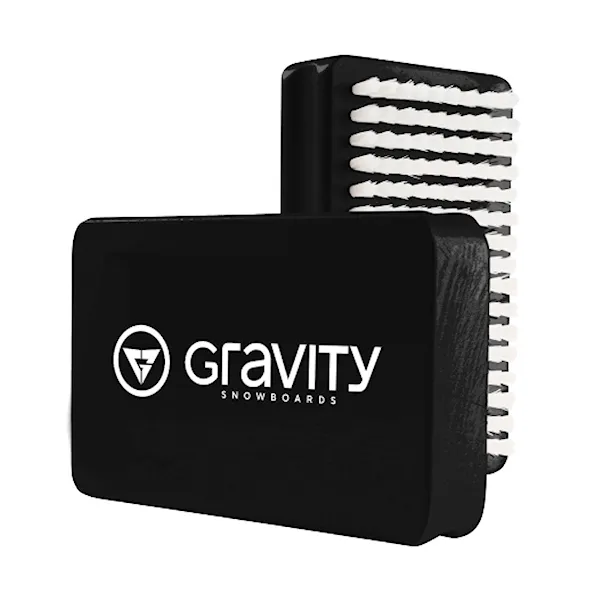
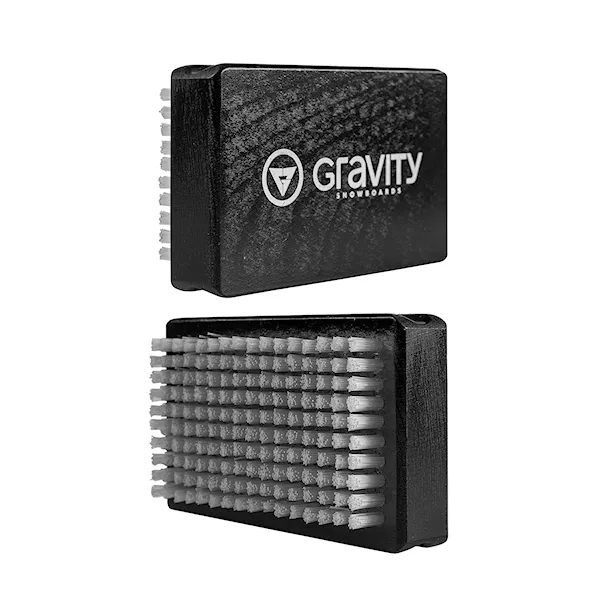
Gravity Wax Brush black/white
12.00 €
-
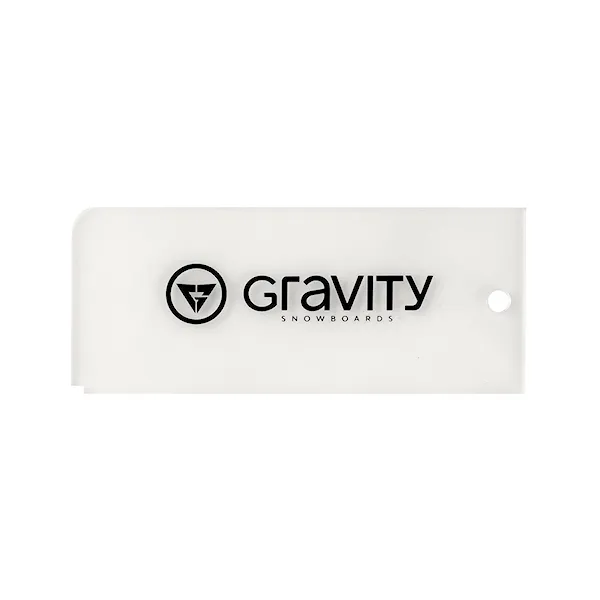
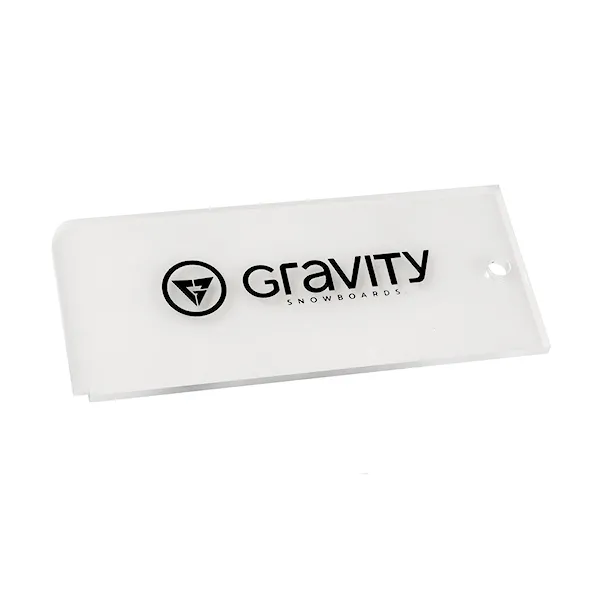
Gravity Wax Scraper clear
6.00 €
-
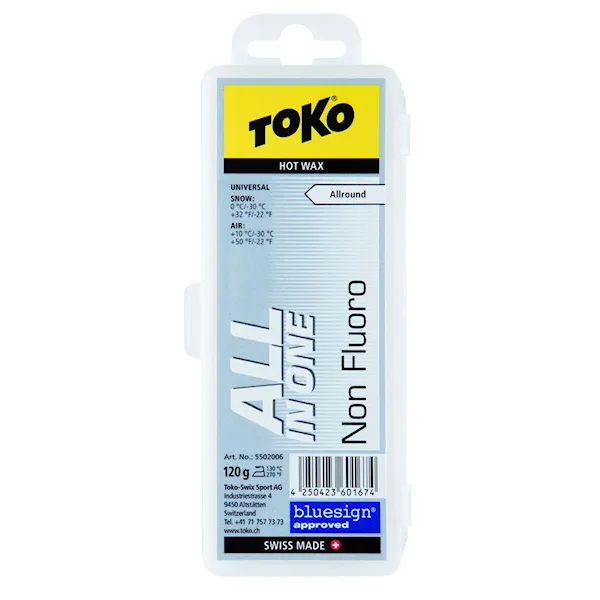
- 120 g
Toko All In One Hot Wax 120 g
16.00 €
-
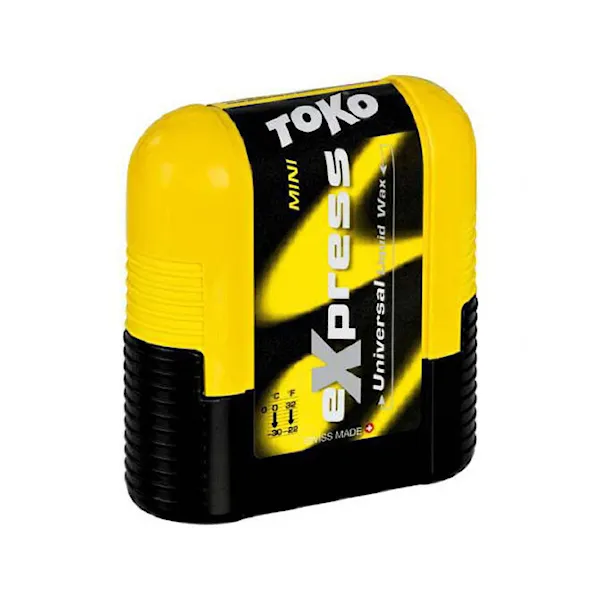
- 75 ml
Toko Express Mini 75 ml
13.90 €
-
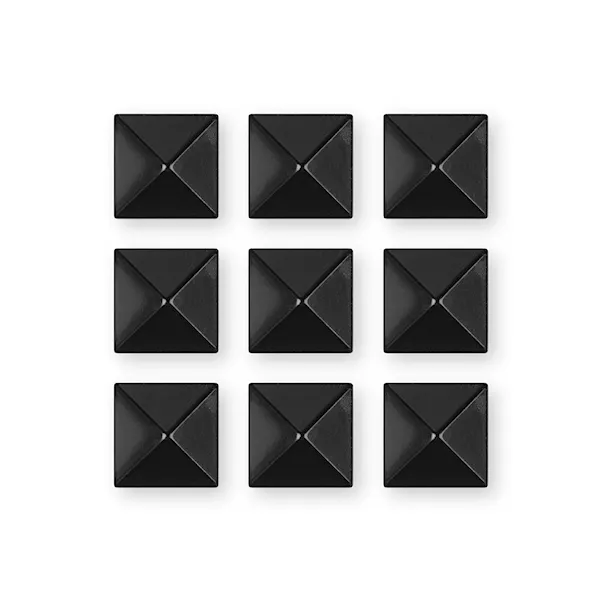
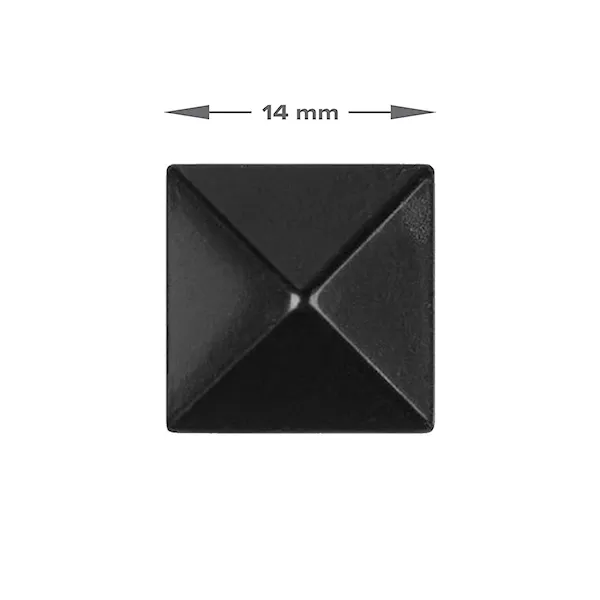
Gravity Pyramid Studs black
12.00 €
When choosing a snowboard, it is important that it matches the level and experience of the rider and his overall physical constitution - i.e. height and weight. A beginner with no previous experience should choose a snowboard that is not too specific in its parameters for a specific snowboarding style.

Advanced riders usually prefer a specific style – freeride (freeride / pow), freestyle (park riding on obstacles, jumps) or universal/allround (riding on the slope).
VIDEO: How to Choose a Snowboard
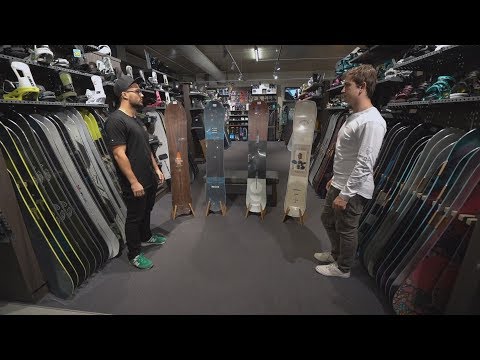
Snowboard Length
The length of a snowboard should generally be up to the chin. If the rider is expected to grow taller, choose a size between the chin and nose. For freestyle, you can choose a slightly shorter board, but this is not a rule. A board that is too short could cause you to over-turn in a turn, while a board that is too long makes it difficult to turn and is generally more difficult to control.
Rider's Weight
Every snowboard has a specified weight tolerance – i.e., the range between the minimum and maximum weight of the rider. When choosing a snowboard, it is important to consider whether the rider's weight falls within this tolerance. If the rider is too light for the chosen snowboard, they will not be able to bend it sufficiently in turns, will not ride the entire length of the effective edge, and will not be able to take advantage of the board's properties. Riders whose weight exceeds the weight tolerance risk overloading or damaging the snowboard.
If you are not sure whether the snowboard you have chosen is suitable for your weight, ask us!

Snowboard Width
The width of the snowboard is also an important parameter. The idea is that when riding in a turn, the rider's toes or heels should not touch the slope. Riders with boot sizes UK 10.5 (EUR 45) and larger should look for wide snowboards when choosing a board. With such a board, they will be able to carve turns without scraping the slope with their toes. Snowboards are also manufactured in mid-wide (slightly wider boards) and superwide (wide boards for really large feet) versions.


Snowboard Flex (Stiffness and Flexibility)
Softer boards are more suitable for beginners, are easier to control and forgive more mistakes. They are also sought after by freestyle riders who spend most of their time jibbing (riding over obstacles). However, at faster speeds, a soft snowboard is no longer obedient in the arc and cannot bounce as nimbly as a stiffer board.
Stiffer boards require experienced, fast to aggressive riding. When ridden fast, it holds better on edge and overall on frozen surfaces. The choice of a very stiff snowboard depends on the rider's experience, riding style as well as weight - lighter riders should opt for a softer snowboard instead. Not sure how stiff your snowboard is? Ask us!
Women's Snowboards
Women's snowboards take into account the specifics of the female figure. Girls have a different centre of gravity than men, their feet are smaller and their height/weight ratio is also different. All these differences are reflected in the geometry and construction of women's snowboards.
Women's snowboards are narrower, usually softer, and inserts are moved a few millimetres closer to the centre compared to the men's version.
Snowboard Camber Types
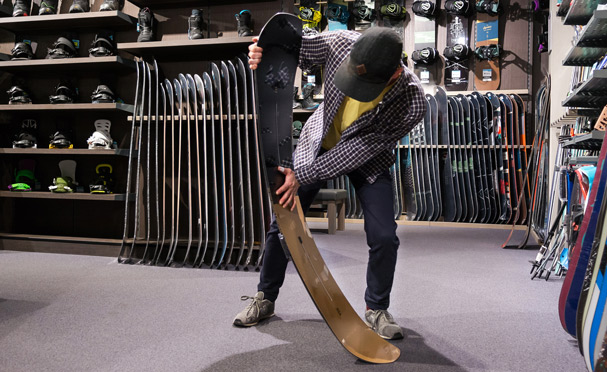
Another criterion when choosing a new snowboard is also the type of profile, such as camber, rocker, flat and various hybrid profiles such as CamRock, Flying V etc. The best way to know the type is to put the snowboard on a flat floor and look at its profile to see where it is bent and which parts of the base are touching the ground.
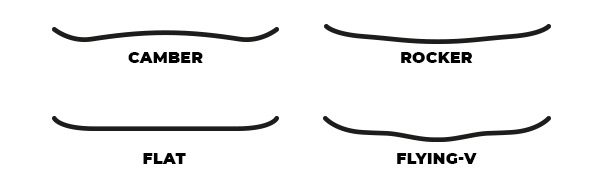
A beginner will be most comfortable with a rocker that is more forgiving of mistakes. The opposite camber bend is better suited for more experienced riders, as it can bite the edge more easily, so it's good to have the snowboard under maximum control, and it has more pop and more precise control over the rocker. The flat profile with almost zero camber provides stability in all terrain, but is most used in snowpark. The hybrid profile is a combination of camber and rocker together, making it a versatile all-mountain board. You can find out more about camber types in our dedicated article.
Balance of Components
The individual components of the snowboard equipment should be balanced. High-end snowboard assumes a higher model of bindings and snowboard boots. The equipment should be a balanced unit. Manufacturers often list recommended combinations of components in their catalogues and websites.
If you're buying a whole set of gear, it's a good idea to start by choosing your boots. Depending on the size, shape, thickness and possibly the brand of the snowboard boots, the appropriate bindings will be chosen.
For the maximum life of your snowboard, it's a good idea to follow a few rules and tips - these can be found in the article Snowboard Maintenance: Base and Edge Care.
Manufacturer address:
Nidecker SA
2 place de l’Industrie
1180 Rolle
Switzerland
Address of the European representative of the manufacturer:
Low Pressure Studio BV
Johan Van Hasseltweg 8B
Vw Amsterdam 1022
Netherlands
Email: gpsr@ndk.group