Wetsuit O'Neill Youth Reactor II Back Zip 3/2 Full black/slate
Collection spring 2025 Product ID 107383


Wetsuit O'Neill Youth Reactor II Back Zip 3/2 Full black/slate
Collection spring 2025 Product ID 107383
Colorways


62.90 €
90.00 €
Sale 30% off
Price history
Lowest price in the last 30 days before the discount was applied: 90.00 €

- Free delivery from over 100.00 € order value
- Estimated delivery on Tuesday 27. 10.
O'Neill Wetsuit Youth Reactor II Backpack 3/2mm Full
A minimal investment that unlocks endless fun. This is exactly what Youth Reactor II represents for all enthusiastic young water enthusiasts. An improved version of the much-loved Reactor range with the perfect combination of flexibility and durability. The back and chest panel better retains heat and the back zipper ensures quick and easy donning and doffing. The Reactor II keeps you stylishly comfortable even in cold water and is built to last.
Specifications
- Ultraflex - highly elastic, soft and premium neoprene for great feel, flexibility and performance
- Strategic Seamless Padle Zones - an ergonomically shaped panel in the armpit area that allows unrestricted movement
- Wind-Proof Smoothskin - a panel with a smooth lining in the chest and back area that increases protection against the wind
- Adjustable Single Seal Collar - adjustable collar with seal
- Krypto Knee Padz - reinforcement that extends the life of the wetsuit and above all protects the knees
- Flatlock Stitched Breathable Seams - breathable and durable seams, the most popular method of stitched construction, 4 needles and 6 threads are used during stitching, which creates a very strong connection, but it is not intended for extremely cold conditions.
- BackZip - back system with zipper, offering easy dressing and undressing
- Strategically placed seams for more comfort
- Key pocket
- Thickness 3/2 - 3 mm thickness on the torso and in critical areas such as the shoulders and kidneys, 2 mm on the limbs, ideal for temperatures of 12-17 °C

Might come in handy
-
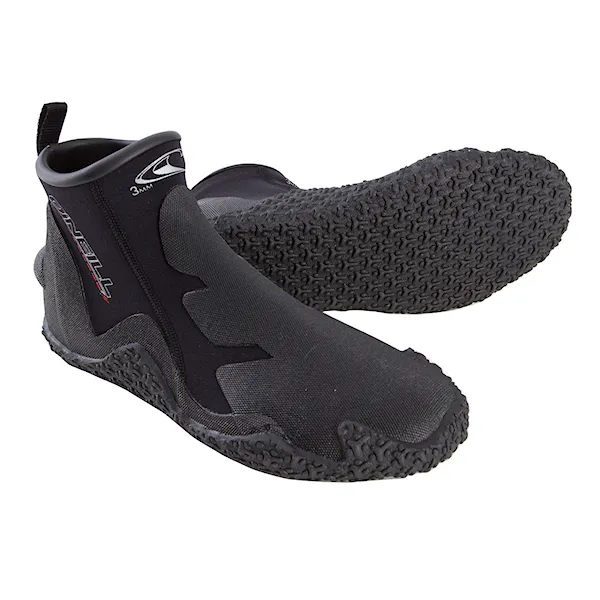
- UK 4
- UK 6
- UK 7
- UK 8
O'Neill Tropical 3 mm black
53.00 €
-
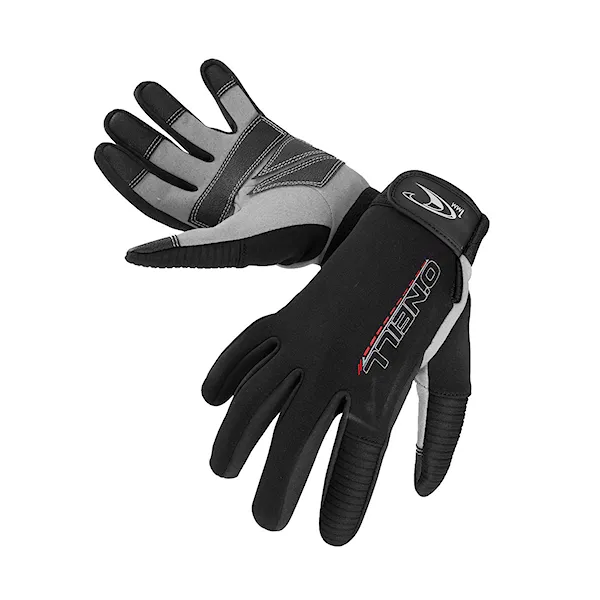
- M
- L
O'Neill Explore 1 mm black
43.00 €
-
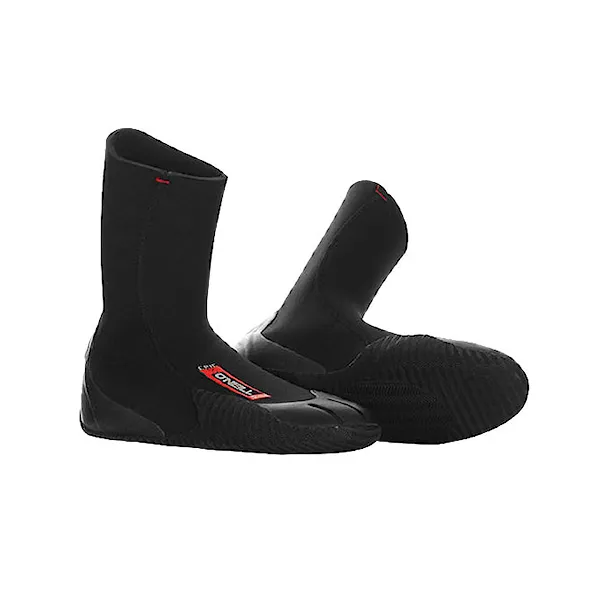
- UK 4
O'Neill Epic 5 mm RT black
45.00 €
-
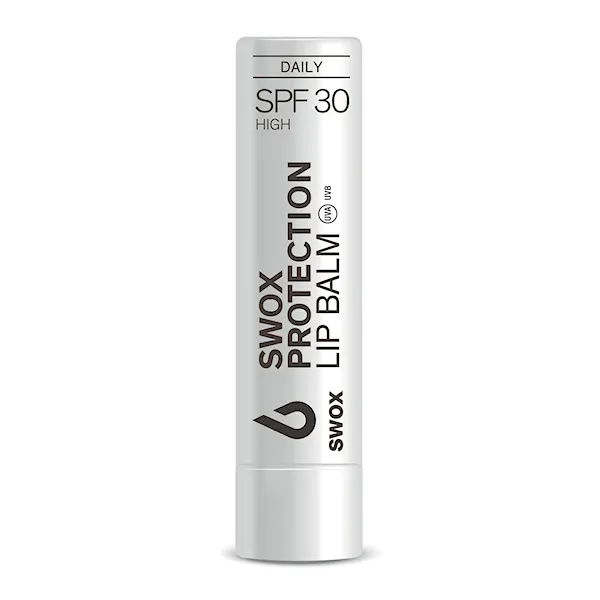
- 4 g
SWOX Mineral UV Lip Balm
6.90 €
-
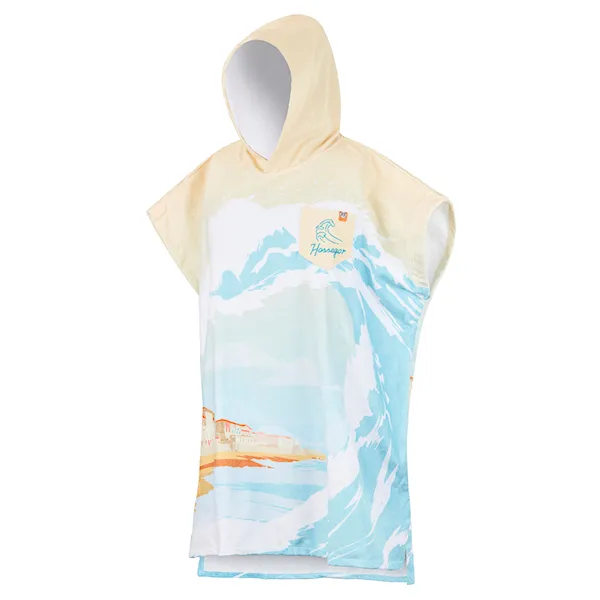
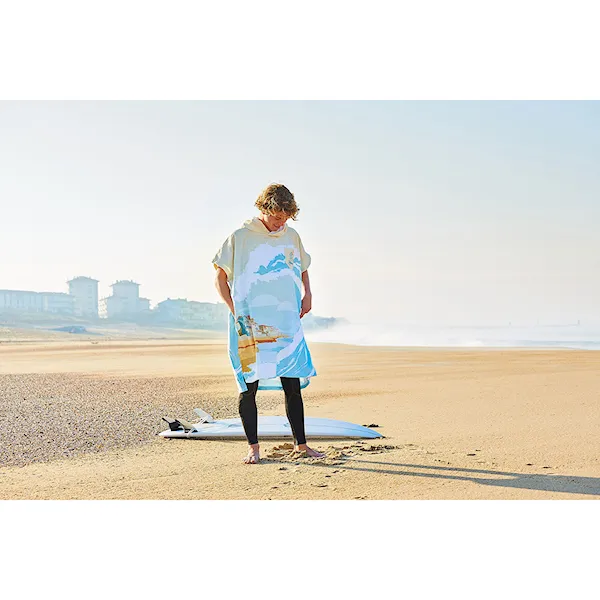
- 1690
After Destination Hossegor
70.00 €
-
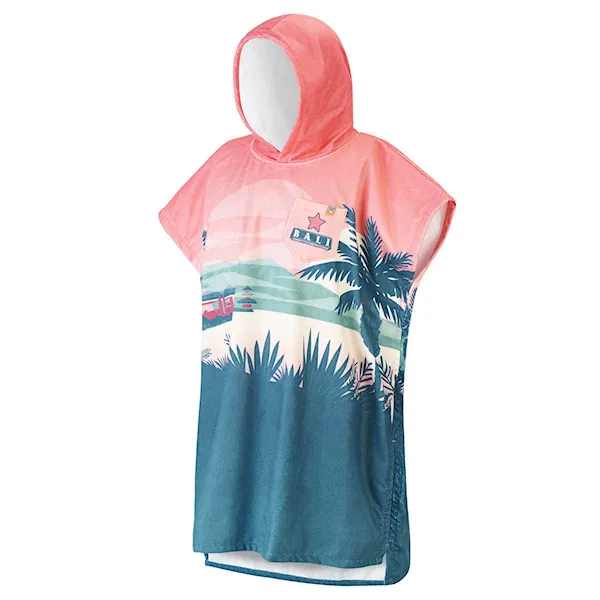
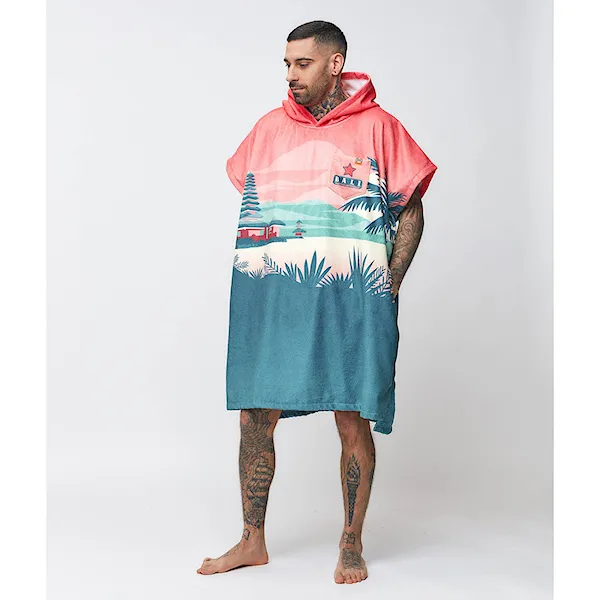
After Destination Bali
70.00 €

| 4 | 6 | 8 | 10 | 12 | 14 | 16 | ||
|---|---|---|---|---|---|---|---|---|
| A | HEIGHT OF RIDER (cm) | 118-126 | 126-133 | 133-141 | 141-147 | 147-155 | 155-163 | 163-170 |
| B | WIDTH NEOPRENE (cm) | 58-64 | 62-67 | 66-71 | 71-76 | 74-79 | 79-84 | 84-89 |
| C | BELT WIDTH (cm) | 51-56 | 55-60 | 58-64 | 58-64 | 64-69 | 69-74 | 71-76 |
Quality wetsuit should be part of the equipment of every wakeboarder or fan of other water sports - but do you know which one to choose? This article will make your decision easier!
Protection against cold, abrasion and sunlight
The basic function of wetsuit is thermal protection. The neoprene coverall protects the rider not only from cold, when temperatures are not ideal for swimming, but also from abrasion and sunlight. Because water, along with wind, absorbs heat from the body by evaporation, it makes sense to protect it with wetsuit from cooling down even at temperatures above 20°C. In warm weather, when we only need to protect ourselves from the sun, it is also possible to use lycra, i.e. T-shirts with long or short sleeves. Lycra are made of high quality quick-drying fabric.
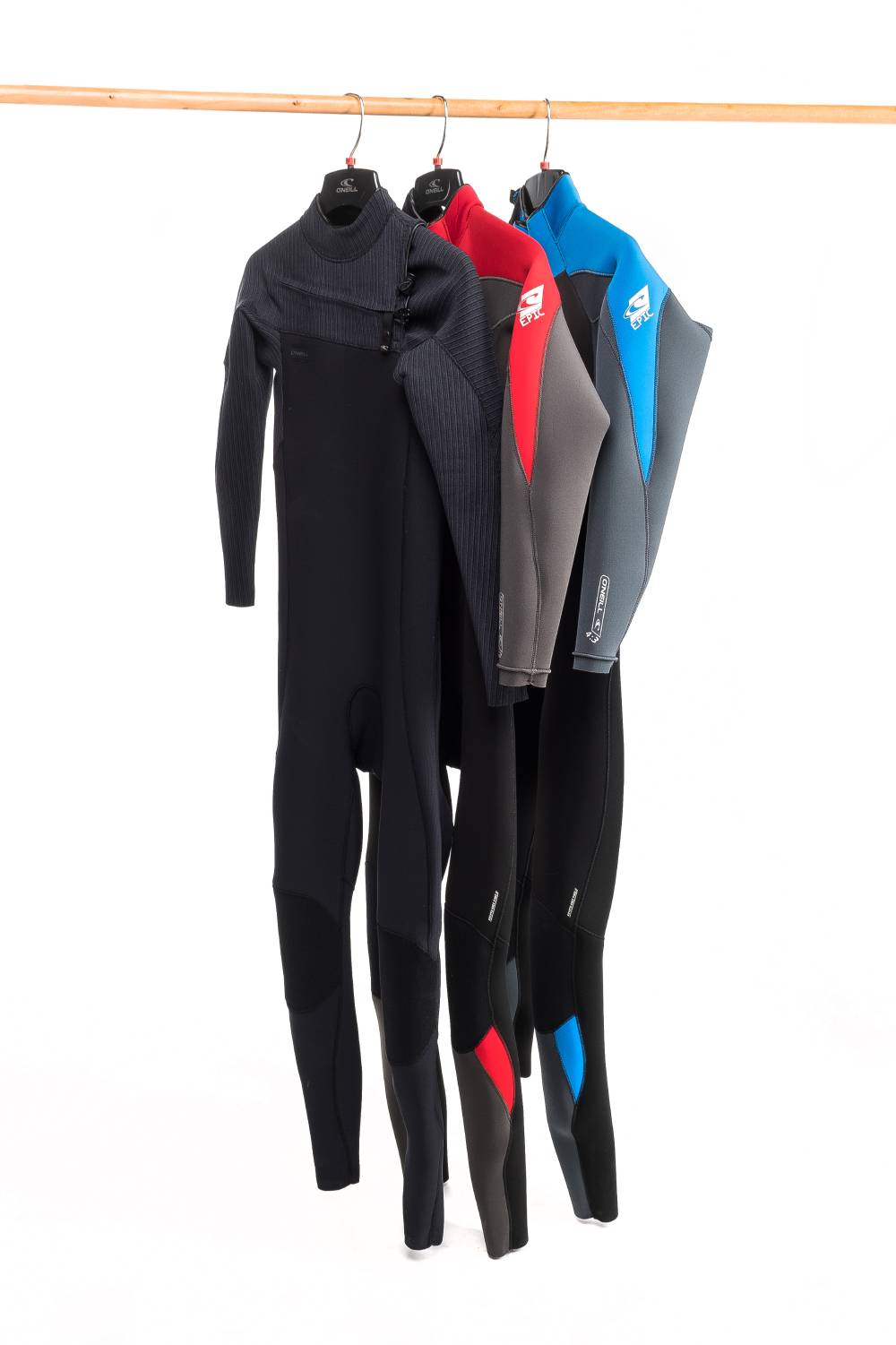
The size of the wetsuit is important for proper thermal function
Wetsuit works by capturing and maintaining a weak layer of water between material and the body. Our body heats this layer of water and thus it is pleasantly warm in the wetsuit. Wetsuit should therefore be comfortable, but at the same time tight. Otherwise, when you dive or meet a bigger wave, a dose of ice water gets on your back ... And you really don't want to!
Thinner wetsuit for summer weather, thicker wetsuit for cold weather
Wetsuit is made of a thin chloroprene rubber, neoprene, which has thermal insulation properties. The material thicknesses used are from 2.5mm to6 mm. In general, thicker material is designed for colder weather and vice versa. There are a number of wetsuit. The basic diversification is as follows:
2 basic types of wetsuits
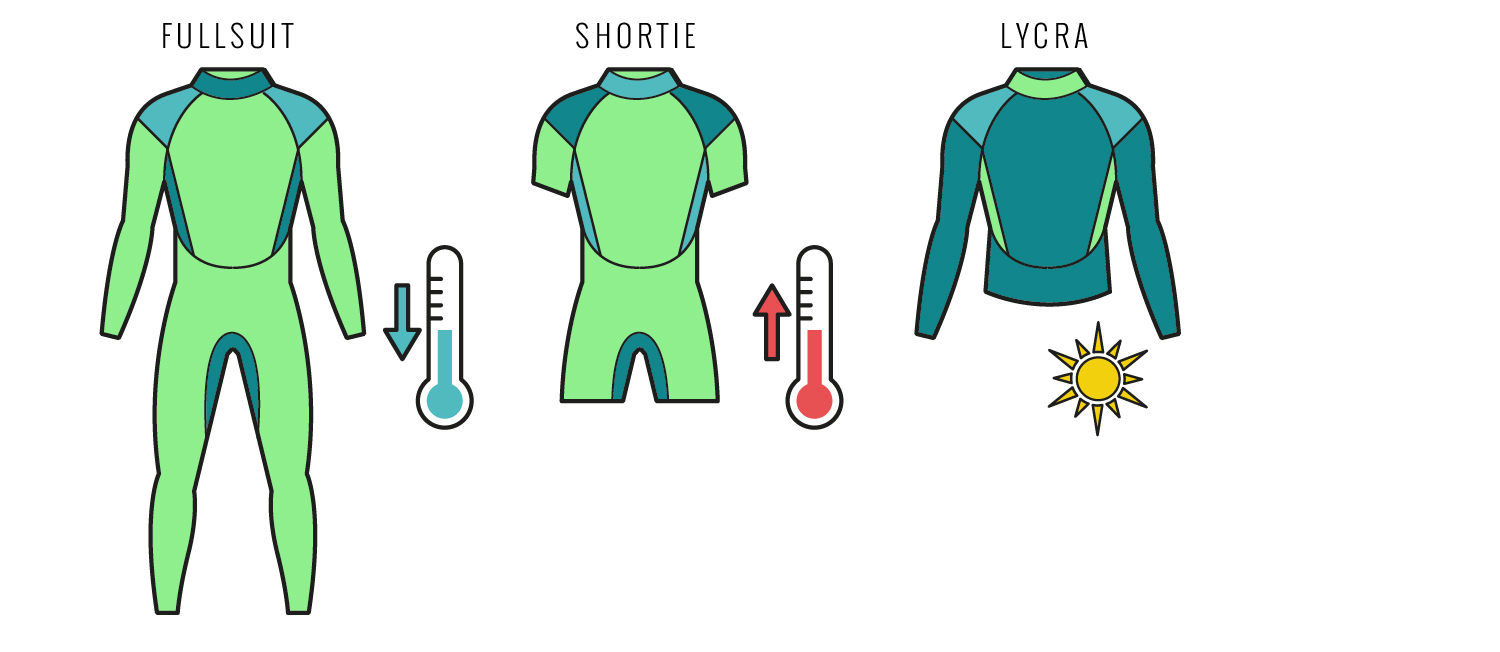
The full length is simply used in colder periods or conditions. Short suit rather in summer, depending on the water temperature. In addition to the torso, the short suit also covers the arms and thighs, so there is better limb mobility.
Choose also according to your subjective feelings
There are a number of combinations of cuts: swimsuit, with long sleeves and shorts, with three-quarter pants or swimsuit with long sleeves. The choice of wetsuit is therefore very subjective, depending on whether you tend to be cold on the upper half of your body, or vice versa, in which you feel better, in what conditions you will ride most often and so on.
What about thickness of the wetsuit and where can I find it?
Thickness is a basic information and can be found in the description or even in the name of the wetsuit. The thickness of the wetsuit can be given by only one number (eg 3). However, you may also come across a 5/4 or 6/4/3 format.
Thickness 3: the wetsuit is the same thickness everywhere, in this case 3 mm.
Thickness 5/4: the first value is the thickness on the torso (i.e. 5 mm) and in critical points such as the shoulders, kidneys, etc. The second value applies to the rest of the body, i.e. the limbs (in this case 4 mm).
Thickness 6/4/3: this three-digit combination gives information on a thickness of 6 mm on the body, 4 mm on the legs and 3 mm on the hands.
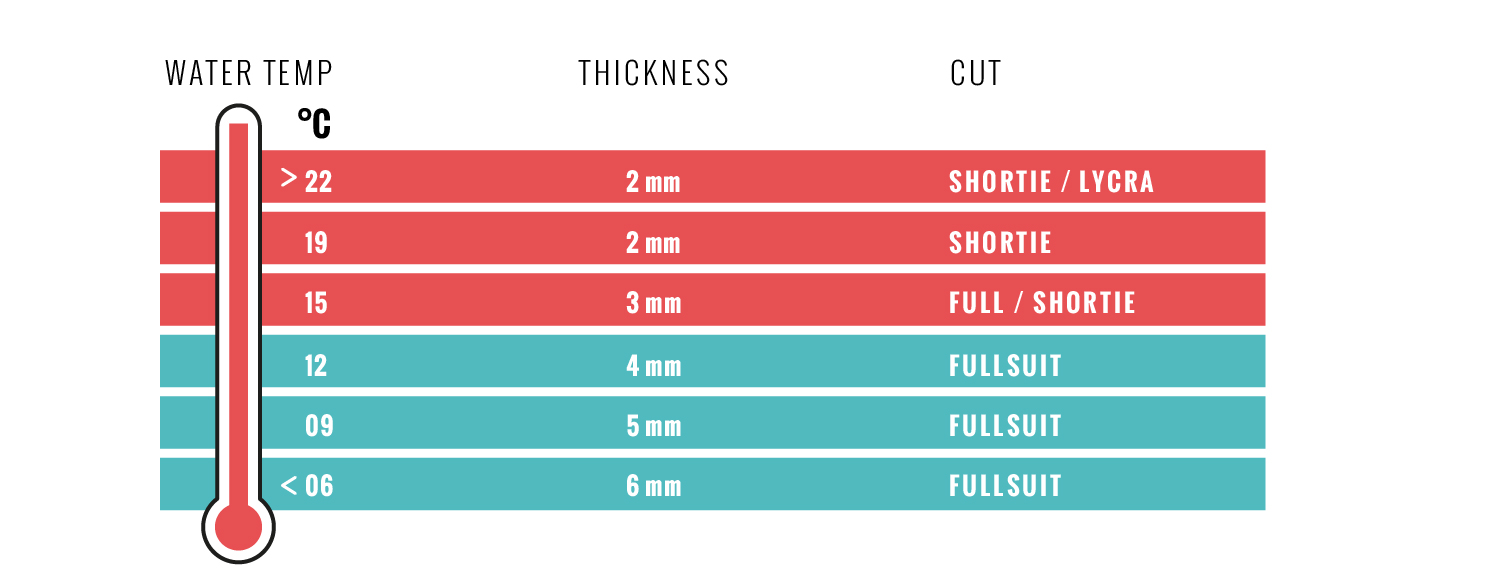
Summer wetsuits are usually up to 3 mm thick and are more suitable for warm water and weather with temperatures above 18°C.
Winter wetsuit is usually product with a thickness of 4/3, 5/3, 6/4/3. They are usually partially or completely rubberized. The designation winter does not mean that it is a wetsuit intended for winter, but rather for spring, autumn and in our country also summer conditions with air and water temperatures around 10-20°C.
Which wetsuit is suitable for specific temperatures?
A combination of sewn and glued seams is ideal
A sewn seam is simply just sewn. After sewing, there will be small holes caused by needle. A small amount of water may flow in this place. The glued seam is completely sealed with a rubber band, so the water has no chance to penetrate. Wetsuit with the combination of sewn and glued seams achieves the best thermal properties. At the same time, the taped seam also has higher flexibility than just sewn.
Last, but not least. The most important thing: Once you have this beauty at home, you need to be able to take care of it. Both during the season and in winter, when wetsuit rests in the closet. Take care of your wetsuit like a pro with our dedicated article!